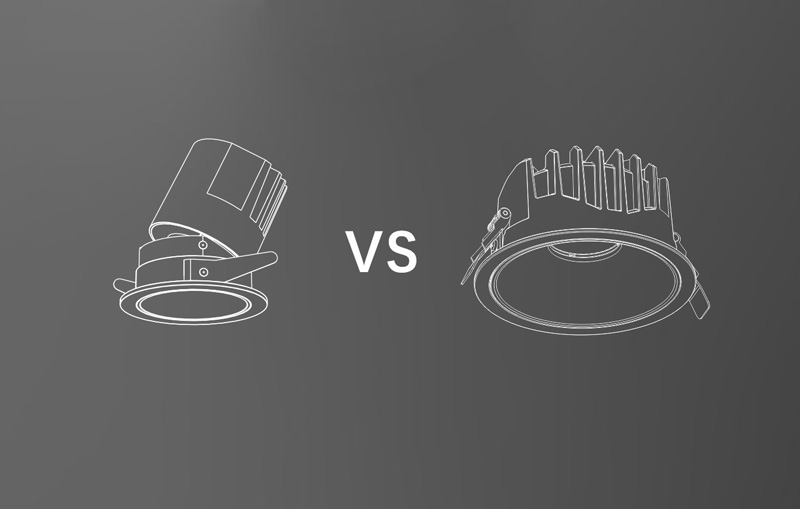
What is the difference between led downlights and LED spotlights?

The difference between LED downlights and LED spotlights lies primarily in their design, beam angle, application, and lighting effects. Here’s a clear breakdown from an engineering perspective:


1. Design and Structure

  • LED Downlights:
    Typically recessed into the ceiling, they are designed to provide a broad, uniform spread of light. Downlights have a clean, low-profile appearance, ideal for minimalist designs.
  • LED Spotlights:
    Usually surface-mounted or installed on adjustable fixtures, they have a narrower beam and are often directional. Spotlights may protrude slightly and are used to highlight specific areas or objects.

2. Beam Angle

  • LED Downlights:
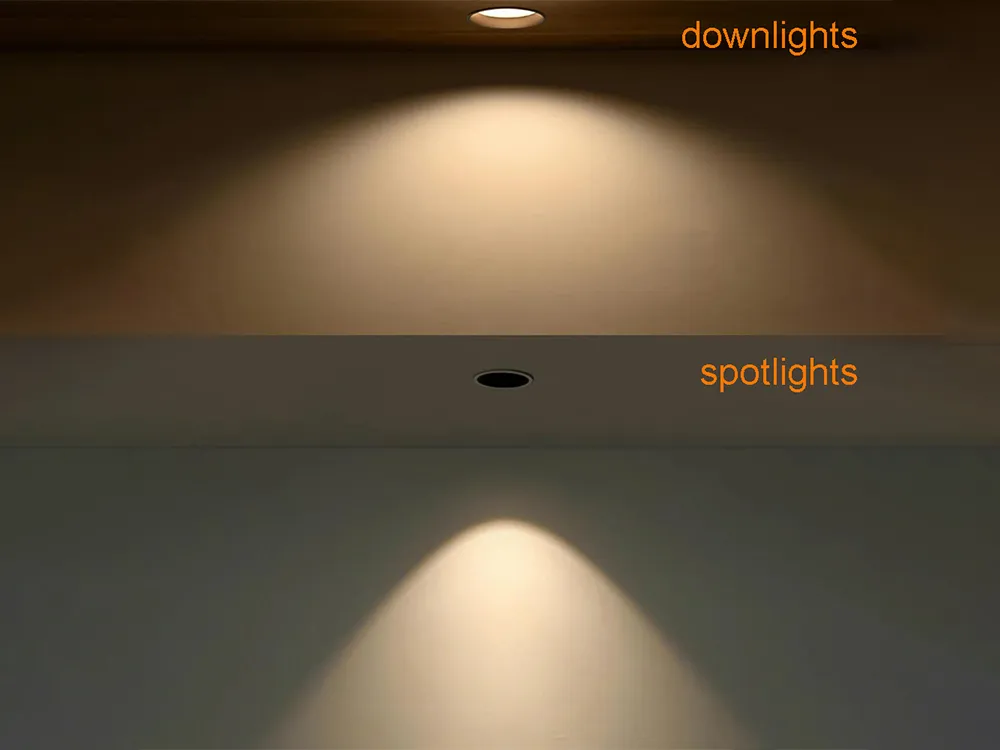
    Feature a wider beam angle (60°-120°) to illuminate a large area with even light distribution.
  • LED Spotlights:
    Have a narrower beam angle (15°-45°) for focused lighting, creating highlights and shadows to enhance depth.

3. Lighting Purpose

  • LED Downlights:
    Used for general lighting, creating ambient brightness in spaces like living rooms, offices, and corridors.
  • LED Spotlights:
    Serve as accent lighting to highlight specific objects, such as artwork, architectural details, or display items in retail spaces.

4. Adjustable Direction

  • LED Downlights:
    Usually fixed and direct light straight downward.
  • LED Spotlights:
    Often adjustable, allowing users to direct the beam toward specific targets or adjust the angle for flexibility.

5. Light Effect and Atmosphere

  • LED Downlights:
    Provide a softer, more diffused light, creating a comfortable and uniform ambiance.
  • LED Spotlights:
    Deliver sharper, more intense light, adding contrast and drama to a space. They are excellent for creating visual focus.

6. Applications

  • LED Downlights:
    • Residential: General room lighting.
    • Commercial: Offices, lobbies, and retail spaces for uniform illumination.
  • LED Spotlights:
    • Residential: Highlighting decorations, paintings, or shelves.
    • Commercial: Museums, galleries, retail displays, or restaurants for creating emphasis.

7. Power Consumption and Efficiency

  • Both downlights and spotlights use energy-efficient LEDs. However, spotlights may have slightly higher power consumption due to their intensity.

Which to Choose?

  • If you need general, widespread illumination, go for LED downlights.
  • If you need focused, dramatic lighting, choose LED spotlights.

Both options can complement each other in a well-designed lighting plan!
Related Articles

  • What is the importance of high CRI in LED Lighting?

    The Color Rendering Index (CRI) is a crucial factor in LED lighting as it directly affects how colors appear under artificial light. A high CRI indicates that the light source renders colors more naturally and accurately, which is important in various applications. Here’s why: 1. Enhances Color Accuracy and Quality A high CRI (typically 90…

  • What is L70?

      In the LED lighting industry, L70 is a metric that defines the useful lifetime of an LED product. It refers to the number of operating hours until the LED’s light output (luminous flux) has decreased to 70% of its initial value. For example: If a product is rated L70 = 50,000 hours, it means…

  • What is IEC/EN 60945? (Marine / Shipboard Certification Explained)

    IEC/EN 60945 Marine Certification Explained IEC/EN 60945 is an international standard for electronic equipment used on ships and offshore environments. It defines the requirements for marine navigation and communication equipment, ensuring that devices can operate safely and reliably under harsh maritime conditions. The standard is issued by the International Electrotechnical Commission (IEC) and adopted in…

  • Waterproof LED Tubes in Plant Growth Lighting

    GAOPIN  Waterproof LED tubes  are becoming increasingly popular for plant growth lighting in environments like greenhouses, indoor farms, and hydroponic systems. These LED tubes provide a reliable, energy-efficient lighting solution that can withstand humidity, moisture, and even direct water exposure, making them ideal for environments where plants are grown under artificial lighting. In plant growth…

  • The Benefits of LED Poultry Lighting on Animal Growth in Animal Husbandry

    As global demand for efficient and sustainable livestock farming increases, the role of lighting in animal husbandry has become more prominent than ever. Among various solutions, LED poultry lighting has emerged as a game-changing technology that not only reduces energy costs but also enhances animal welfare and growth performance. This article explores how modern LED…

  • Reducing Energy Stress Worldwide Through Efficient LED Lighting

    In an era defined by rising energy demand, escalating electricity costs,  and growing pressure on global power grids, improving energy efficiency has become an urgent priority. In the early years of LED Lighting adoption, millions of households, factories, and public facilities upgraded from traditional lighting to first-generation LED products. These LEDs delivered major improvements in…