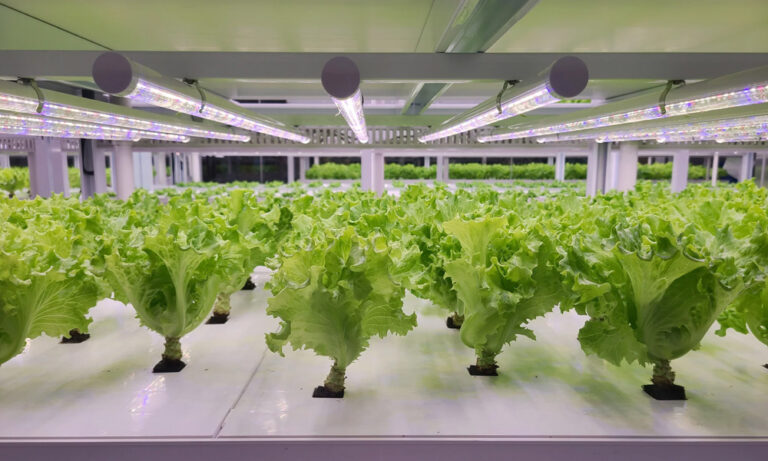
To compare the energy savings of two different LED tubes (GAOPIN P02 Series 200LM/W LED Tube 9W, 200lm/W vs. 18W, 100lm/W) for a parking lot with 2000 tubes running 24 hours a day for 3 years, let’s break it down:
Assumptions:
- Light Output: Both LED tubes need to provide the same brightness (lumens).
- Working Hours: 24 hours a day.
- Time Period: 3 years.
- Total Tubes: 2000 tubes.
Step 1: Calculate the Required Lumens for Each LED Tube
Since we need both LED tubes to provide the same brightness in the parking lot, we need to ensure that both setups produce the same total luminous output.
- 200LM/W LED Tube 9W :
- Luminous efficacy: 200 lm/W
- Power: 9W
- Lumens per tube = 9W × 200 lm/W = 1800 lumens
- 18W LED tube:
- Luminous efficacy: 100 lm/W
- Power: 18W
- Lumens per tube = 18W × 100 lm/W = 1800 lumens
Both tubes output 1800 lumens, so they will provide the same brightness.
Step 2: Calculate Total Power Consumption Per Day
Now, we calculate the total energy consumption per day for each setup.
- 9W LED tubes:
- Power per tube: 9W
- Total tubes: 2000
- Daily energy consumption = 9W × 2000 tubes × 24 hours = 432,000 Wh or 432 kWh per day
- 18W LED tubes:
- Power per tube: 18W
- Total tubes: 2000
- Daily energy consumption = 18W × 2000 tubes × 24 hours = 864,000 Wh or 864 kWh per day
Step 3: Calculate Total Energy Consumption for 3 Years
Now, let’s calculate the energy consumed over 3 years (365 days × 3 years).
- 9W LED tubes:
- Daily energy consumption: 432 kWh
- Annual consumption = 432 kWh × 365 = 157,680 kWh per year
- 3-year consumption = 157,680 kWh × 3 = 473,040 kWh in 3 years
- 18W LED tubes:
- Daily energy consumption: 864 kWh
- Annual consumption = 864 kWh × 365 = 315,360 kWh per year
- 3-year consumption = 315,360 kWh × 3 = 946,080 kWh in 3 years
Step 4: Calculate the Energy Savings Over 3 Years
Now, let’s calculate the energy savings from using the 9W LED tubes instead of the 18W LED tubes.
- Energy savings = 946,080 kWh (18W setup) – 473,040 kWh (9W setup)
- Total energy savings over 3 years = 473,040 kWh
Step 5: Calculate the Cost Savings (Optional)
If you know the local cost of electricity (for example, $0.10 per kWh), you can calculate the cost savings.
- Cost savings = 473,040 kWh × $0.10 = $47,304
Summary of the Energy Savings Comparison
| Parameter | 9W LED Tubes | 18W LED Tubes | Savings |
|---|---|---|---|
| Power per Tube | 9W | 18W | – |
| Total Power Consumption per Day | 432 kWh | 864 kWh | 432 kWh |
| Total Power Consumption for 3 Years | 473,040 kWh | 946,080 kWh | 473,040 kWh saved |
| Energy Savings over 3 Years | – | – | 473,040 kWh |
| Cost Savings (at $0.10 per kWh) | – | – | $47,304 |
Conclusion:
By using GAOPIN P02 Series 200LM/W LED Tube 9W LED tubes with 200 lm/W efficiency instead of 18W LED tubes with 100 lm/W efficiency, the parking lot can save 473,040 kWh of electricity over a 3-year period, which translates to a potential cost saving of $47,304 (assuming an electricity cost of $0.10 per kWh). This results in significant energy savings and contributes to reducing carbon emissions.